.png)

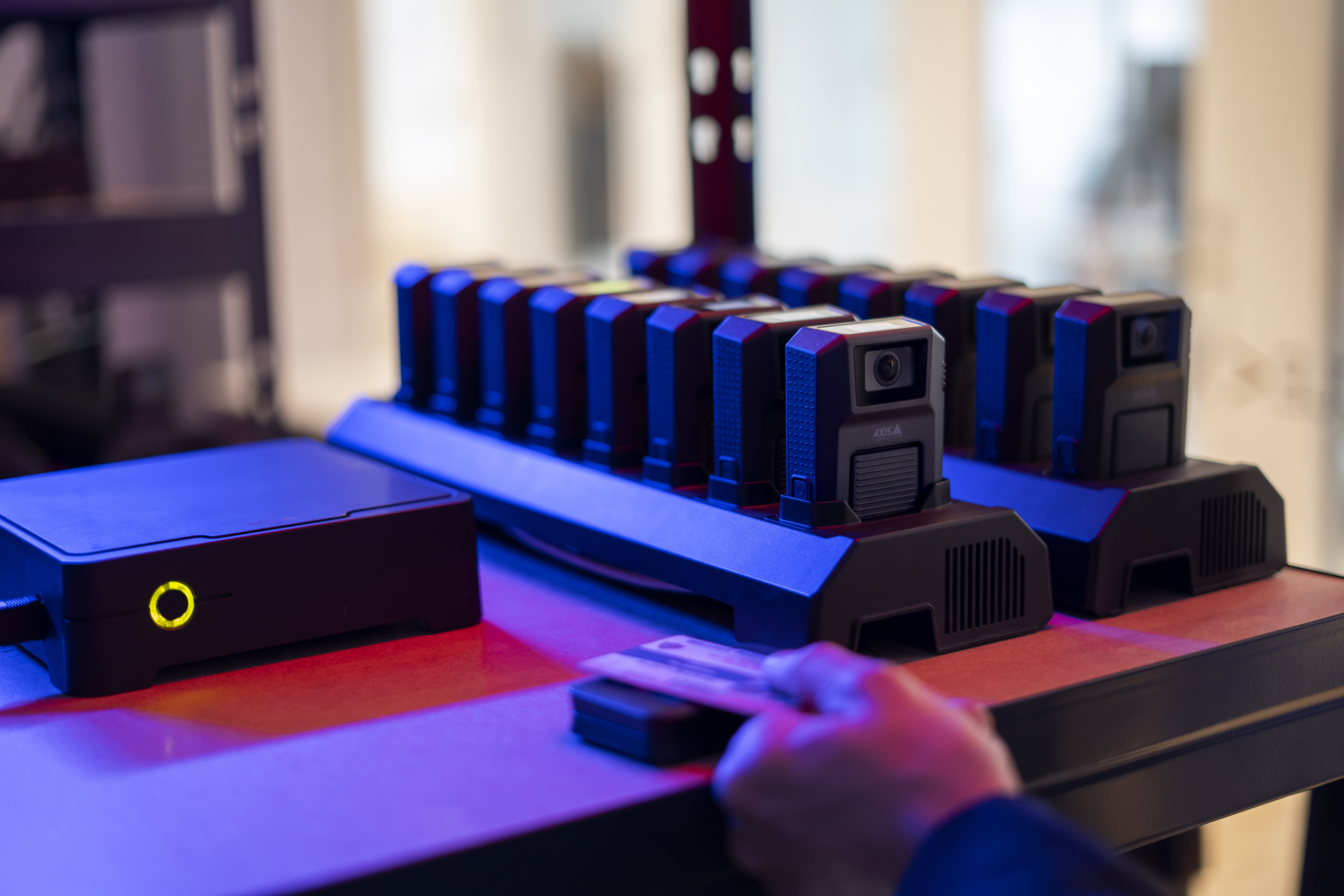
Are cameras, access control, and alarm systems the weakest link in organizations today?
Most organizations invest in protecting servers, workstations, applications, and cloud environments. Far less attention is paid to technical security systems, which are increasingly becoming part of the network infrastructure and a potential target for cyberattacks.
Why have technical security systems become a part of cybersecurity?
For many years, CCTV monitoring, access control, and intrusion detection systems operated as isolated solutions. Today, the situation is different.
Modern technical security systems (TSS):
- are connected to the corporate network,
- use remote management,
- communicate with other systems,
- store and process operational data,
- utilize cloud and IoT solutions.
In practice, this means that every camera, access controller, or recorder can serve as a potential entry point into the organization.
The most common problems include:
- default passwords left unchanged,
- outdated firmware versions,
- incorrect device configuration,
- lack of communication encryption,
- improper network segmentation,
- limited security event monitoring.
As a result, an organization may effectively protect its IT infrastructure while lacking full control over the systems responsible for physical security.
Five questions to ask yourself
1. Do we know how many technical security systems (TSS) devices are operating in the organization?
Technical security infrastructure is often built up over many years. Devices come from various manufacturers and were implemented by different integrators, which is why a complete inventory does not always exist.
2. Do we know the vulnerability level of these devices?
A lack of knowledge about software and firmware versions means a lack of knowledge about potential threats.
3. Is the configuration compliant with the security policy?
In many cases, the greatest risk is not a new vulnerability, but an incorrect configuration.
4. How quickly can we detect unauthorized changes?
Without continuous monitoring, an organization may remain unaware of changes affecting the security of its environment for a long time.
5. Who is responsible for TSS security?
Responsibility for these systems is often fragmented across IT, cybersecurity, and facility management departments, as well as external vendors, which hinders effective risk management.
Why are traditional audits no longer enough?
The classic approach relies on periodic infrastructure reviews. The problem is that environments are constantly changing.
There are:
- new devices,
- new software versions,
- new vulnerabilities,
- new configurations.
Information obtained during an audit may only be current for a short time.
That is why solutions providing the following are becoming increasingly important:
- automatic device inventory,
- continuous configuration monitoring,
- ongoing vulnerability identification,
- risk assessment based on current data,
- rapid detection of irregularities.
SENTRIGRADE platform. Greater visibility and control over technical security systems
This premise led to the creation of the SENTRIGRADEproject, carried out by squareTec in cooperation with the Poznan University of Technology.
The goal of the project is to develop a platform that supports organizations in identifying, analyzing, and monitoring the security of technical security systems used in high-security environments.
The solution under development is intended to enable:
- automatic detection of TSS devices,
- security configuration analysis,
- identification of known vulnerabilities,
- automation of diagnostic activities,
- monitoring environmental changes,
- using artificial intelligence to support risk assessment.
Our goal is not to create another security dashboard. We want to provide a tool that helps answer the key question:
Do I know which parts of my infrastructure require attention today and why?
How can AI support technical security?
Technical security systems generate vast amounts of data regarding configurations, events, and dependencies between devices.
Artificial intelligence can support:
- big data analysis,
- anomaly identification,
- detection of configuration errors,
- assessing the impact of vulnerabilities on the entire environment,
- prioritizing risk-related actions.
This allows security teams to make faster decisions and focus more effectively on real threats.
Summary
Organizations usually have a very good understanding of:
- what laptops they have,
- what servers they have,
- what applications they use.
They are much less likely to possess equally detailed knowledge of the systems responsible for protecting buildings, people, and business processes.
Yet, this is precisely the area where two worlds are increasingly converging: physical security and cybersecurity.
Does your organization have full visibility into the systems responsible for its security?
This is a question worth asking yourself today. Without comprehensive knowledge of technical security systems, it is difficult to effectively manage risk and build organizational resilience against modern threats.