Cloud solutions for security, data, and IT infrastructure
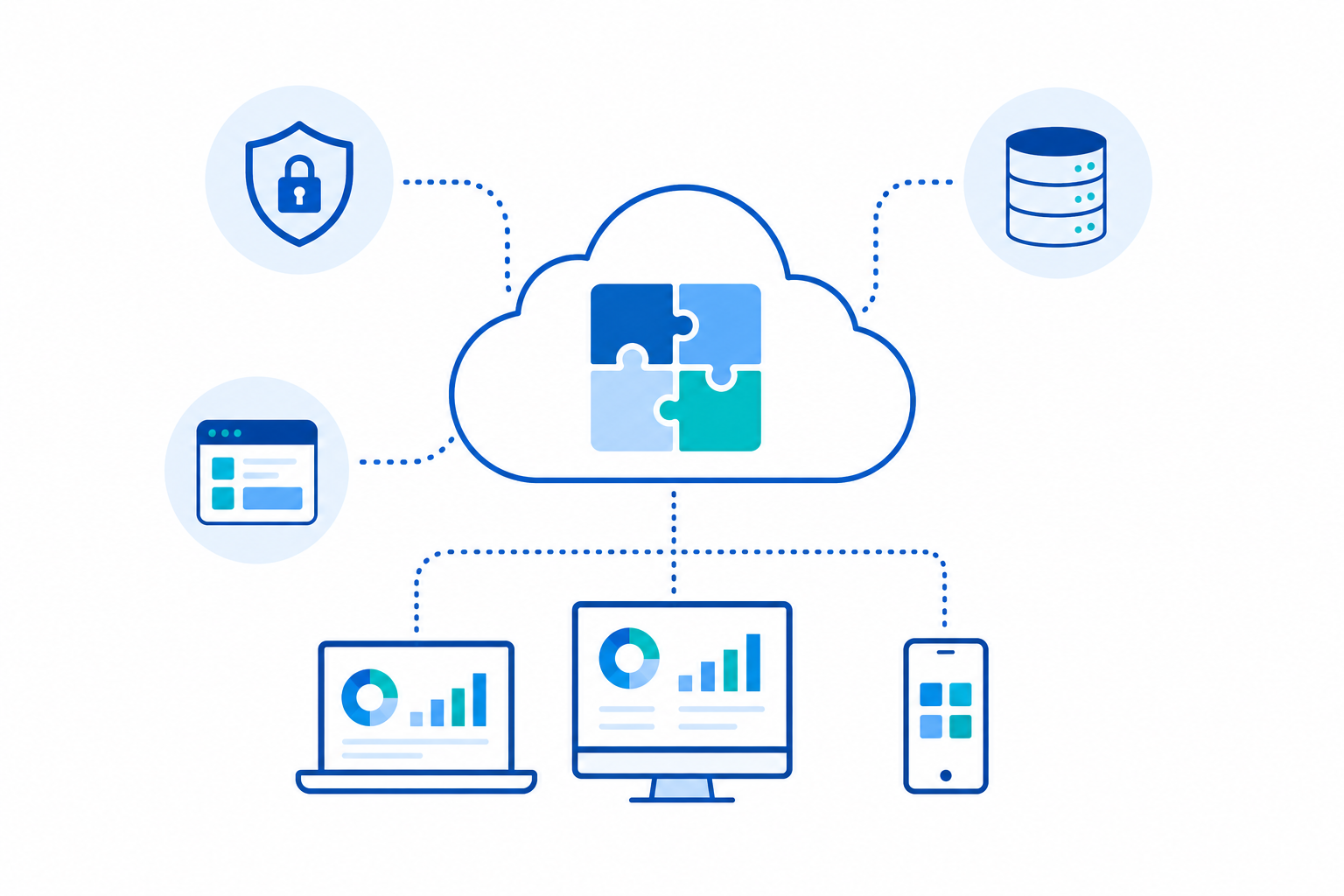
The cloud can be part of an organization's infrastructure that simultaneously utilizes its own data centers, on-premises systems, edge devices, and external services. In such environments, it is crucial to properly distribute tasks across the individual layers.
squareTec designs and implements cloud, hybrid, and private environments, taking into account requirements regarding data, availability, performance, and infrastructure control.
We analyze the existing environment and determine which systems should remain on-premises, which can be migrated to the cloud, and how to connect both environments.
Cloud architecture tailored to your organization
We begin the cloud environment design process by analyzing your existing infrastructure and how your organization operates.
We examine:
- which systems and applications are currently in use,
- where data is located,
- which systems require local processing,
- what dependencies exist between individual environments,
- what the requirements are for availability and business continuity,
- what information can be transmitted between locations,
- how the environment should evolve in subsequent stages.
Based on this, we select the appropriate infrastructure model. It may include private cloud, hybrid cloud, sovereign cloud, multi-cloud, and selected public cloud services.
Hybrid cloud - a combination of cloud, on-premise, and edge
Many organizations have systems that cannot or do not need to be moved to the cloud.
These may include legacy applications, systems requiring local processing, infrastructure operating in isolated networks, or solutions where a very short path between the device and the data processing system is critical.
In such environments, a hybrid architecture works best, combining:
local systems → edge infrastructure → data center → selected cloud services
Individual components can serve different functions. Data requiring local analysis remains at the source, some information goes to the central infrastructure, and cloud resources can handle tasks requiring greater computing power or easy scalability.
Edge computing
In distributed systems, not all data needs to go directly to a central environment.
Edge processing allows information to be analyzed closer to where it is generated. This can be significant for IoT devices, monitoring systems, industrial infrastructure, or locations with limited bandwidth.
The architecture may include:
- local devices and sensors,
- edge servers,
- local processing systems,
- central IT environment,
- cloud services.
This solution allows for reducing the amount of transmitted data and keeping some processes local. Selected information needed for further processing, analysis, or archiving can be sent to the cloud.
Integrating the cloud with existing IT infrastructure
A new cloud environment must work with the systems an organization already has.
squareTec designs connections between the cloud and:
- local data centers,
- servers and storage,
- ICT networks,
- dedicated applications,
- databases,
- IT and OT systems,
- edge and IoT devices.
We also design data flows between individual environments. In doing so, we take into account connection performance, service availability, authorization methods, and system separation requirements.
This allows new services to be deployed in stages, without the need to overhaul the entire infrastructure at once.
Hybrid cloud for multiple locations
Organizations with multiple facilities or branches often need to combine centralized management with local data processing.
In this model, selected services can be accessed from a single central environment, while individual locations retain their own systems and resources.
The architecture can support:
- centralized delivery of selected services,
- data exchange between locations,
- resource management across multiple facilities,
- gradual onboarding of new locations,
- scaling resources as the organization grows.
How tasks are divided between locations and the central environment depends on the requirements of the specific project.
Security and control over the cloud environment
Choosing a cloud model also involves determining where data is located, who can access it, and who manages the infrastructure.
For projects in the public sector, defense, and critical infrastructure, the following may be significant:
- location of data and resources,
- infrastructure management methods,
- administrative access,
- environment separation,
- data flow control,
- service provider requirements,
- the ability to maintain selected systems on-premises,
- data storage and retention policies.
Based on this, an infrastructure model suitable for a specific organization can be selected – from an on-premises environment and private cloud to a hybrid model or selected public cloud services.
Sovereign cloud and data control
For public organizations and entities performing tasks related to national security, control over where data is processed and how the environment is managed is also a key issue.
Sovereign cloud architecture can be considered where an organization needs greater control over:
- data location,
- infrastructure,
- administrative access,
- service providers,
- information processing policies.
Depending on your requirements, this environment can be integrated with on-premises infrastructure and selected external services.
Cloud infrastructure scaling
One of the practical advantages of the cloud is the ability to adjust resources to current workloads.
Depending on the architecture, you can increase, for example:
- computing power,
- data storage,
- the number of supported services,
- resources required for data analysis,
- test and development environments.
This is particularly important for projects developed in stages. New applications, locations, or data sources can be added without the need to expand physical infrastructure each time.
Cloud for data analytics and AI
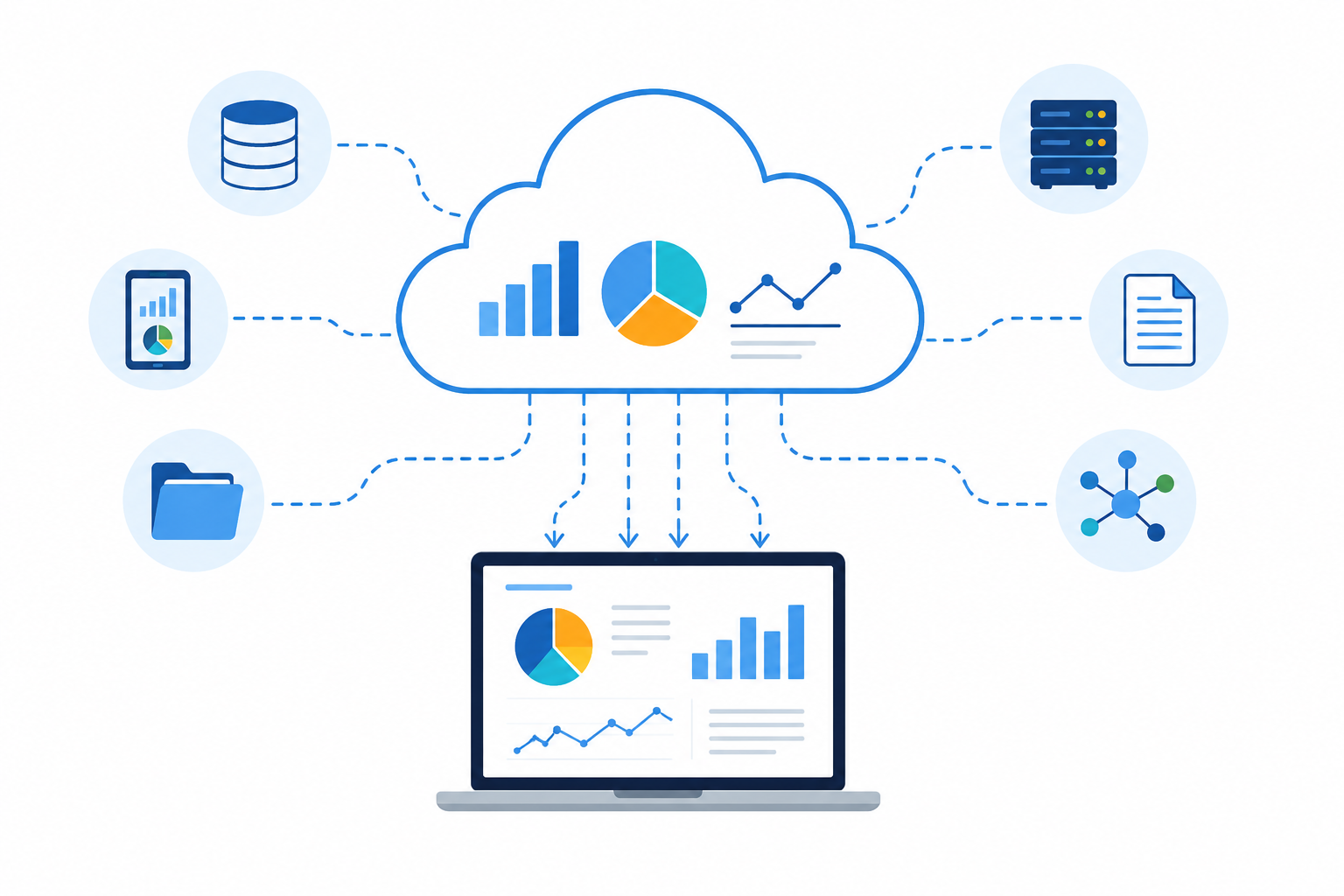
Cloud environments can provide the resources needed to process large datasets and conduct analytical work.
Depending on the project, they are often used for:
- processing large datasets,
- building analytical environments,
- training and testing AI models,
- performing high-performance computing,
- preparing data for analytical applications and systems,
- handling periodic spikes in workload.
Cloud environments for R&D and software development
The cloud is also used for software development and testing.
In projects carried out by squareTec, cloud environments are used for:
- creating development environments,
- preparing test environments,
- load testing,
- conducting research and development,
- training AI models,
- temporarily scaling up computing resources.
This allows for the separation of development and production environments and enables resources to be adjusted to the current stage of the project.
The cloud and existing security systems
A cloud environment can integrate with security systems already in place within an organization and, depending on the project, may involve data exchange with:
- monitoring systems,
- security management platforms,
- access control systems,
- cybersecurity solutions,
- IoT devices,
- dedicated applications.
How do we design cloud solutions?
1. Analysis of existing infrastructure
We examine the systems, applications, data, and inter-site connections currently in use, as well as availability and performance requirements.
2. Choosing a cloud model
We determine which components should remain on-premises, which can be run in the cloud, and where edge processing is required.
3. Architecture and data flow design
We define how environments communicate, where data is located, and the dependencies between applications and services.
4. Integration with existing systems
We connect the cloud environment with IT infrastructure, applications, databases, on-premises systems, and edge devices.
5. Testing and deployment
We verify communication, performance, availability, and the functionality of individual environment components.
6. Environment development
We prepare the architecture for future applications, locations, data sources, and increased workloads.
Cloud solutions for the public sector, defense, and critical infrastructure
We design environments for organizations that need to combine IT infrastructure development with specific requirements for data, availability, and system control.
Cloud solutions can be applied in areas such as:
- public administration,
- defense,
- security services and agencies,
- critical infrastructure,
- transport,
- industry,
- research and development, and dual-use projects.
Cloud technologies used by squareTec
We select technologies based on project requirements and existing infrastructure.
Depending on your needs, we use, for example, Microsoft Azure, as well as solutions from Dell, Cisco, IBM, Check Point, and Palo Alto Networks.
These technologies can serve various functions—from computing and network infrastructure to solutions that support environmental security.
Why squareTec?
Our cloud environment design covers both the infrastructure and how it integrates with your organization's existing systems.
We combine expertise in:
cloud + IT infrastructure + cybersecurity + IT/OT + system integration + software
This allows us to work on both individual infrastructure components and architectures spanning multiple environments and technologies.
Looking to plan your cloud infrastructure development?
If you are wondering which systems to migrate to the cloud, how to connect cloud services with your existing infrastructure, or how to prepare your environment for future growth, we can analyze your project's architecture.
Let’s discuss your requirements and potential solution models.