AI Flow - an AI platform for security system analysis and integration
AI Flow is squareTec's proprietary platform for video and audio data analysis, multi-source information correlation, and event response automation. It combines artificial intelligence algorithms, security system data, and contextual information into a single analytical process.
The platform works with both real-time data and archived footage. It allows for the creation of multi-level analytical processes where the output of one model becomes the input for the next. The system can progress from detecting a single object to recognizing its features, identifying it, analyzing its behavior, and recognizing more complex situations.
AI Flow serves as an analytical and decision-making layer that allows you to leverage data already collected by cameras, VMS, audio systems, and other sources.
Analysis and correlation of data from multiple sources
From a single detection to a complete situational overview.
AI Flow allows you to build multi-stage analytical paths that combine various AI models, data sources, and correlation rules.
Multi-level data analysis
The process can begin with basic detection of a person, vehicle, or other object. Subsequent stages may include classification, identification, feature recognition, behavior analysis, license plate reading, or situational assessment.
Individual results are then combined with information from other cameras, VMS systems, audio devices, and data regarding time, location, and relationships between events.
Correlation of events from multiple systems
The platform combines analytics results from various systems and devices. This allows individual events to be analyzed within a broader context.
For example, detecting a person in a specific zone can be cross-referenced with vehicle information, a license plate reading, access control status, or an event from another camera. Based on this, the system can generate an event, trigger an alarm, or initiate a specific procedure.
Automatic metadata creation
Analysis results are saved as structured metadata, events, and relationships. This facilitates later information retrieval and analysis of archived material without the need to manually review entire recordings.
AI Flow as a security system decision-making platform
AI Flow combines data analysis with the ability to automatically respond to specific events. Based on analytics results and defined rules, it generates alarms, transmits information to external systems, or triggers subsequent actions.
Automated incident response
The platform transmits incident information to VMS, PSIM, operator systems, or other integrated solutions. Defined rules can also trigger specific actions, such as notifying an operator, controlling a device, or initiating a subsequent analytical process.
This allows for the creation of response scenarios tailored to the specific needs of a facility, organization, or security process.
Fewer alarms, more operational intelligence
Correlating data from multiple sources reduces the number of incidents requiring manual verification and provides the operator with broader context.
Instead of analyzing a single signal, the operator receives information that incorporates related events, location, time, video, audio, and data from other systems.
AI-powered video and audio analysis
AI Flow also analyzes sound and speech. This allows information captured outside the camera's field of view to be utilized in the analytical process.
Real-time video analysis
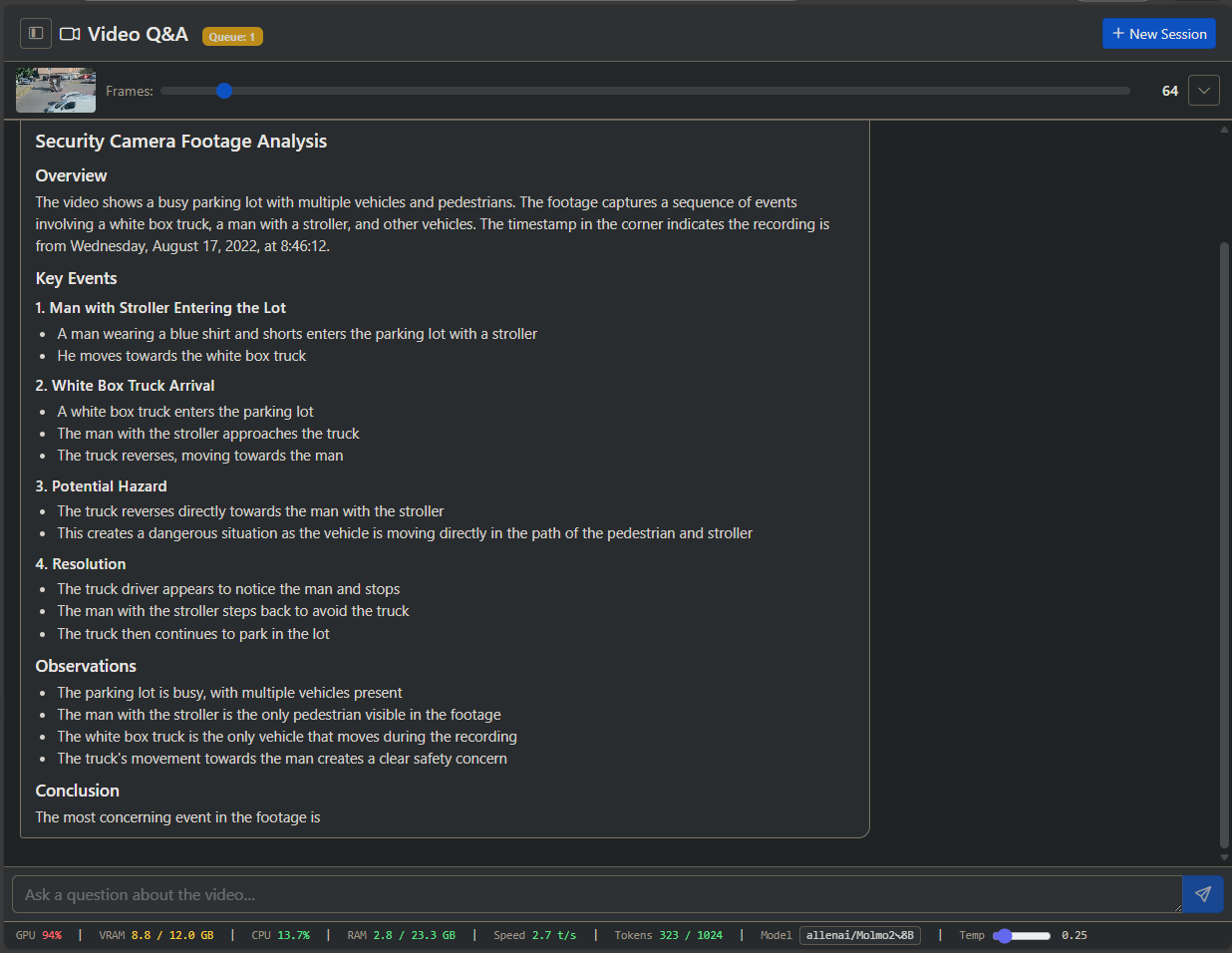
The platform supports features such as object detection and classification, single-camera object tracking, and cross-camera tracking using visual features and spatio-temporal data.
It automatically indexes video footage and filters frames for further analysis, reducing the volume of data that requires intensive processing.
Speech recognition and audio analysis
AI Flow utilizes automatic speech recognition, speaker identification, language detection, keyword searching, and audio event detection.
Transcripts and conversation summaries can then be used during the search and analysis of materials.
Multimodal AI-powered data search
AI Flow allows you to search for information across different data types by combining images, video, audio, transcripts, and metadata.
Natural language information retrieval
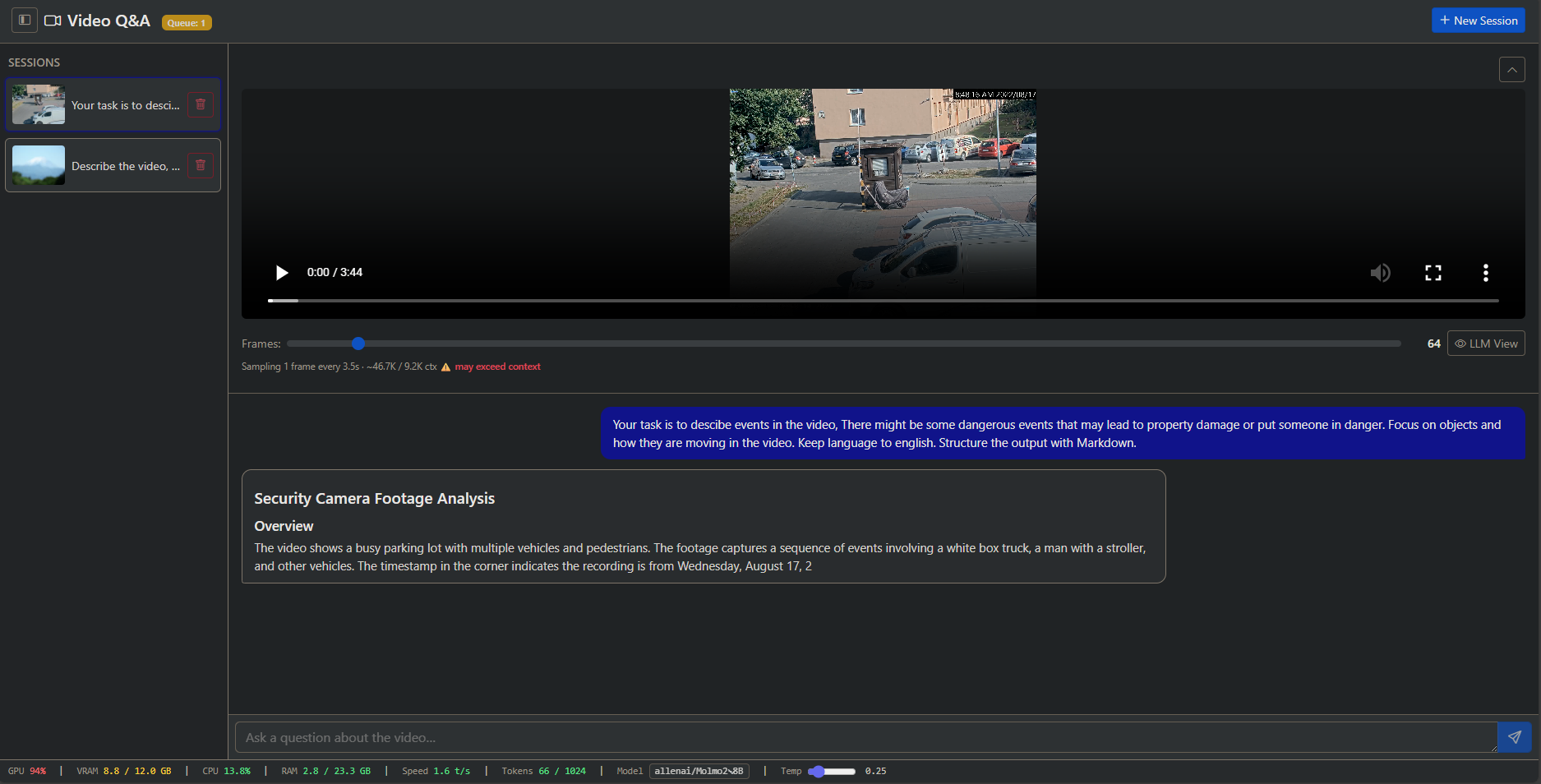
Operators or analysts can specify what they are looking for instead of manually reviewing recordings. The system uses text descriptions to find corresponding segments of material.
Full-text search within transcripts is also available, allowing you to jump directly to the relevant part of the recording.
Combining image, video, audio, and metadata
The platform enables searching across various data types, including text, images, video recordings, transcripts, and metadata.
This allows you to combine information from different sources and find related events faster within large datasets.
Support for analysts and operators
Operators can use AI to search for information, analyze footage, and identify relationships between events.
Instead of manually reviewing large volumes of recordings, they can reach the relevant material faster and focus on assessing the situation.
AI integration with security systems
AI Flow is designed as an open analytical layer that can be integrated with existing systems and data sources.
The platform can work with VMS systems, cameras, audio devices, access control systems, external databases, and other solutions used in security environments.
This allows you to expand the analytical capabilities of your existing infrastructure without having to replace the entire environment.
AI Flow on-premise and secure data processing
AI Flow can be deployed in environments where data control, infrastructure security, and the ability to work in local or air-gapped settings are critical.
The platform's architecture allows you to scale your analytical environment as your organization's needs evolve—adding new AI models, data sources, and analytical scenarios without rebuilding the entire system.
AI Flow features – analysis, correlation, and automation
- real-time and archival image and audio analysis,
- object detection, classification, and tracking,
- multi-camera analysis and event correlation,
- multi-level analytical pipelines,
- automatic metadata generation,
- speech analysis and transcription,
- semantic and multimodal search,
- analysis using AI and LLM models,
- data correlation from multiple systems,
- automatic event and alarm generation,
- integration with existing security systems,
- automated response to defined scenarios.


.png)